Scientists Mapped 1,800 Protein Connections in Autism. Here’s Why That Matters.
Researchers have identified hundreds of genes associated with autism risk.
That is a major scientific achievement.
But it also creates a problem:
If hundreds of different genes are involved, where do scientists even begin looking for treatment targets?
A new Science study from UCSF offers one possible answer.
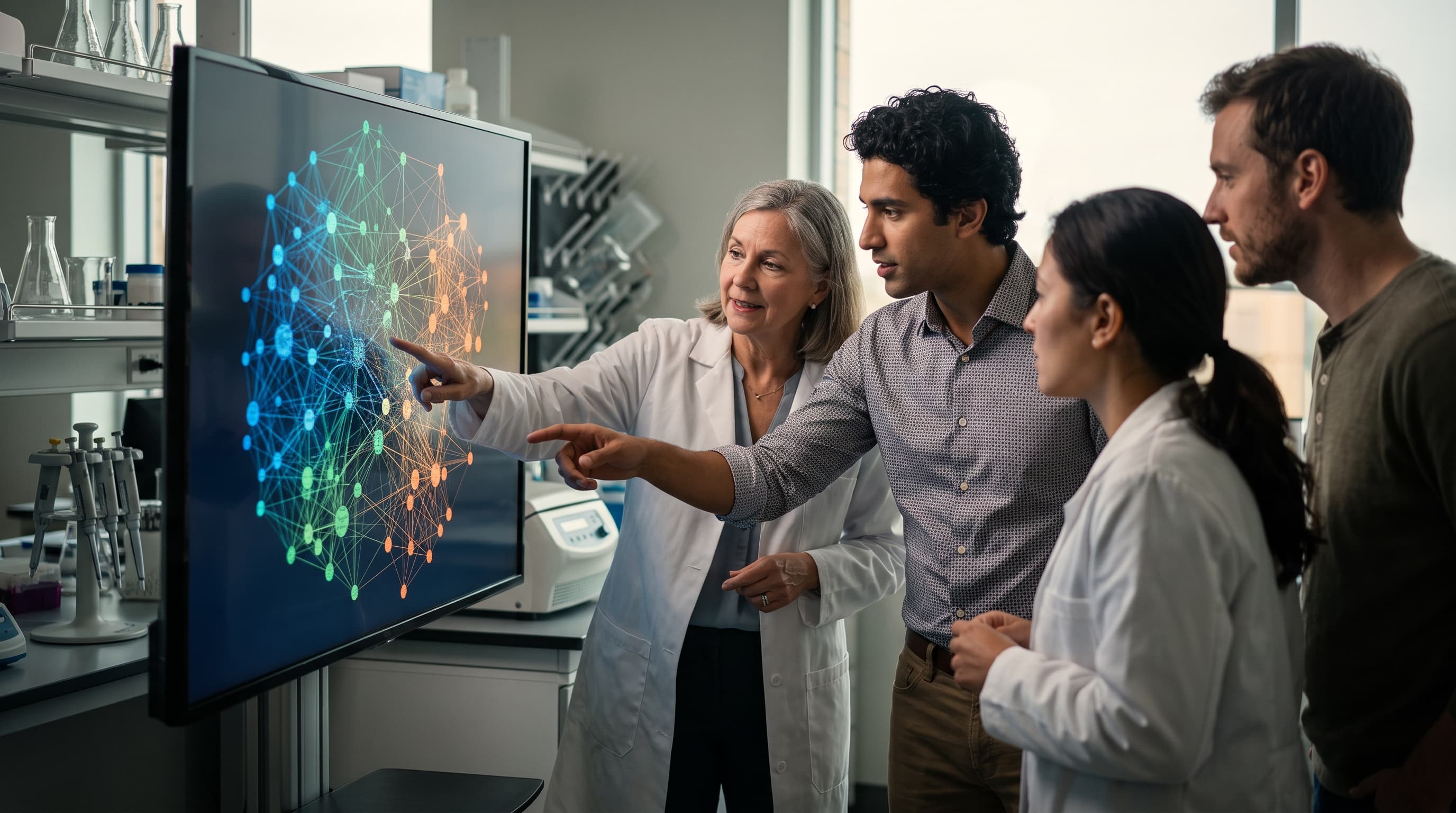
Researchers created the largest molecular interaction map of autism risk genes to date. They focused on 100 high-confidence autism risk genes and mapped how the proteins connected to those genes interact with other proteins.
The result is not a new autism treatment.
It is something more basic — and still very important:
a map.
And sometimes, before science can build the road, it first needs the map.
Why This Study Matters
Autism genetics can easily get oversimplified.
It can sound like:
gene → autism
But biology is not that simple.
A better picture looks like this:
gene → protein → network → brain development
Genes provide instructions. Proteins do much of the work inside cells. But proteins rarely work alone. They interact in networks.
That is why this study is so interesting.
Instead of stopping at the gene level, the researchers asked:
What are these autism-linked genes doing inside larger protein networks?
That question moves the science closer to mechanism.
And mechanism is where future treatment research has to go.
The Big Finding
The UCSF team identified more than:
1,800 protein-protein interactions
Even more striking:
87% had not been previously reported
That matters because autism is genetically diverse. Many different genetic changes may contribute to autism risk.
But this study suggests that different genetic changes may sometimes affect the same shared protein complexes.
That word — shared — is the key.
Instead of every autism-linked mutation pointing in a totally different direction, some may converge on the same biological hubs.
That could change the treatment question from:
Do we need a different treatment for every mutation?
to:
Are there shared molecular pathways that multiple mutations disrupt?
That is a much more useful question.
Think of It Like a Traffic Map
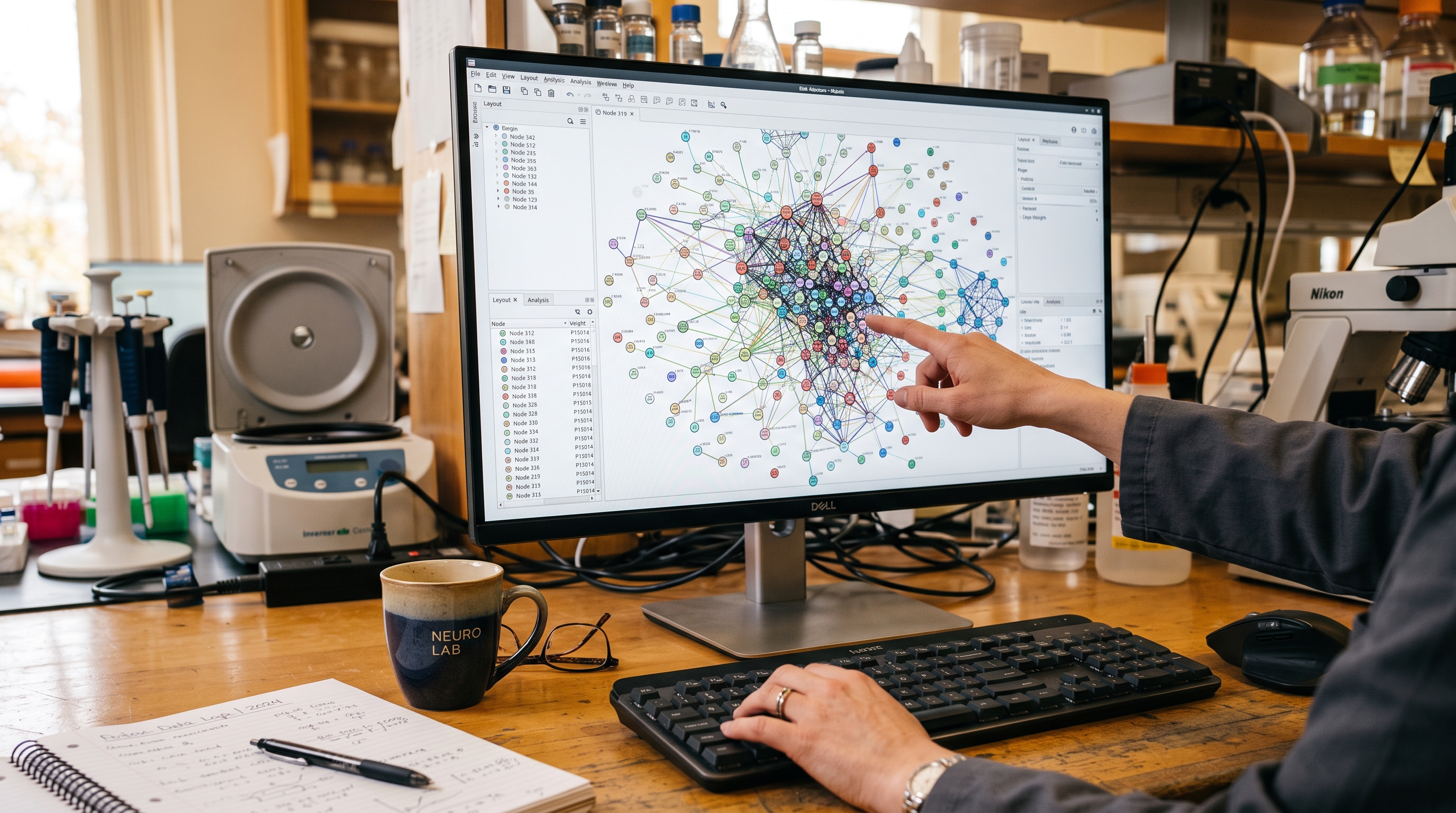
Imagine hundreds of roads leading into the same few busy intersections.
If you only study the roads, everything looks scattered.
But once you find the intersections, the map starts to make more sense.
That is what this protein map may help researchers do.
It does not mean autism is simple.
It does not mean one treatment would work for everyone.
And it definitely does not mean a treatment is available now.
But it may help researchers understand where different genetic clues are leading.
Why This Matters for Profound Autism
UCSF connects this work to the long-term goal of developing precision therapies, including for people with profound autism and individuals who need substantial support in daily life.
That matters.
Too often, the people with the greatest support needs are the hardest to include in research. They may be minimally speaking, have intellectual disability, experience medical complexity, or need significant support to participate in studies.
So when research explicitly includes profound autism in its long-term goals, that deserves attention.
But it also deserves careful language.
Families should not hear:
“A new autism treatment is here.”
That is not what this study shows.
The better takeaway is:
Researchers may now have a more detailed map of molecular systems that future treatments could target.
That is still meaningful.
It is just early.
Where AI Fits In
This study also shows one of the more useful ways AI can support medicine.
The researchers used AlphaFold structural predictions to help understand where specific mutations may disrupt protein interfaces.
That is very different from using AI as a medical advice chatbot.
Here, AI is part of the scientific toolkit.
The workflow looks more like:
genetics → protein mapping → structural prediction → molecular mechanism → possible treatment target
That is the kind of AI-in-health story I find much more interesting.
Less hype.
More actual science.

The $46 Million Follow-Up
This story became even bigger when UCSF announced that its Quantitative Biosciences Institute received a $46 million grant from Aligning Research to Impact Autism, also known as ARIA.
The funding supports a Protein-Protein Interactions Hub designed to build on this molecular map and move the work toward therapeutic development.
That does not mean a medication is around the corner.
Drug development is long, difficult, and uncertain.
But it does mean researchers now have serious support to ask the next question:
Can these shared protein networks become treatment targets?
That is worth watching.
What Families Should Take From This
For families, the takeaway is not:
Ask your doctor for this treatment.
There is no treatment from this study yet.
The better takeaway is:
Autism research is becoming more precise.
Scientists are moving from broad genetic associations toward molecular mechanisms.
That may eventually help researchers understand:
which biological pathways are affected
which mutations converge on shared systems
which targets may be druggable
which groups of people may benefit from specific interventions
That is important.
But autism support has to happen on two timelines.
The long timeline
Precision medicine, molecular biology, drug development, clinical trials.
The immediate timeline
Communication support, AAC access, sleep support, sensory environments, mental health care, education, family support, safe housing, and daily-life quality.
Both matter.
But they are not the same thing.
Final Thought
For years, autism genetics has given researchers hundreds of clues.
This new study may show that some of those clues lead to the same biological places.
That does not mean autism has been solved.
It does not mean a new treatment is available.
But it does mean researchers may have a better map.
And in science, a better map can change everything.
Sources
University of California, San Francisco. (2026, August 27). UCSF QBI is awarded $46 million to advance autism research. https://www.ucsf.edu/news/2026/08/432451/ucsf-qbi-awarded-46-million-advance-autism-research
University of California, San Francisco. (2026, August 27). Autism decoded: New science is opening paths to better treatments. https://www.ucsf.edu/news/2026/08/432446/autism-decoded-new-science-opening-paths-better-treatments
University of California, San Francisco School of Pharmacy. (2026, August 27). Largest molecular map of autism opens path to precision therapies. https://pharmacy.ucsf.edu/news/2026/08/largest-molecular-map-of-autism-opens-path-to-precision-therapies
Wang, B., Vartak, R., Hennick, K., et al. (2026). Autism mutations rewire protein interaction networks to drive neurodevelopmental pathology. Science. https://doi.org/10.1126/science.ady4523